To gain a comprehensive understanding of student internships, strengthen communication and collaboration with internship units, and enhance the management and quality control of the internship process, on November 12, Deputy Director Tang Yongsheng of the Academic Affairs Office led a team to the Industry-Education Integration Practice Base for Energy and Power Engineering—Shanghai Xiege Mechanical and Electrical Technology Co., Ltd.—for on-site investigation and discussion. Participants included staff from the Academic Affairs Office, Quality Assurance Office, Teaching Supervision Office, enterprise representatives from Shanghai Xiege, and faculty and student representatives from the Energy and Power Engineering program of the School of Mechanical and Automotive Engineering.
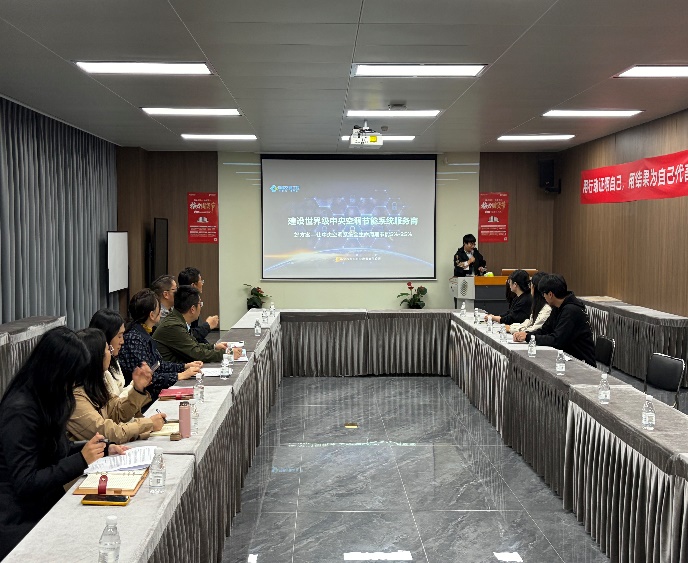
Tang Yongsheng expressed gratitude to the company for providing a high-quality practical platform and professional guidance, and hoped to further expand the breadth and depth of university-enterprise cooperation to jointly build a long-term mechanism for collaborative education. Enterprise representative Qin Lanjuan highly praised the practical abilities of our university’s interns and expressed hope for deeper cooperation in technology R&D, project problem-solving, and talent cultivation in the future. Deng Shengxiang, Director of the Energy and Power Engineering Department, introduced the distribution of industry-education integration internship bases, the characteristics of internship directions, and specific internship content.
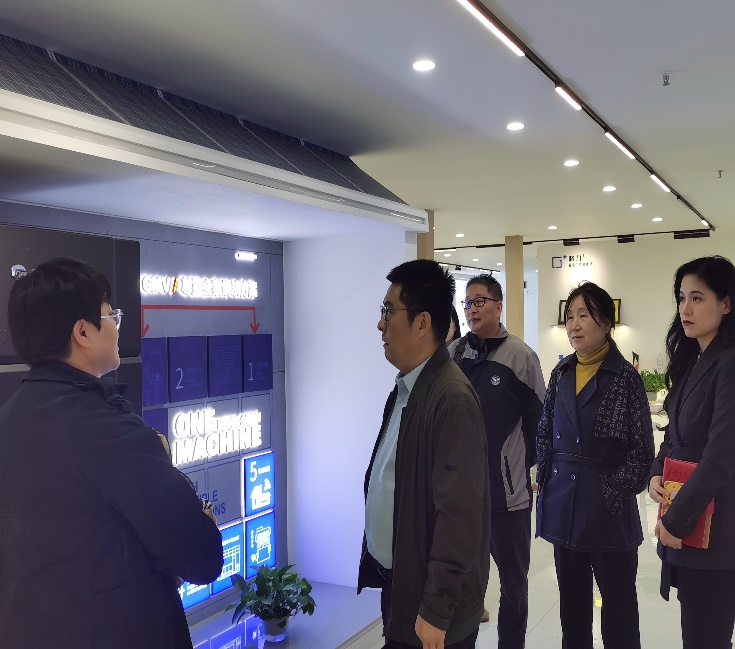
The enterprise representative guided teachers and students on a tour of the company’s air conditioning products, heating equipment, and intelligent air conditioning systems, and observed the students’ internship environment and work status.
After the Energy and Power Engineering program was approved as a university-level model major for industry-education integration, it actively sought and established internship bases in line with its professional characteristics. In the future, the university will continue to standardize the industry-education integration process, improve teaching arrangements, promote innovation in teaching models, and help continuously improve the quality of talent cultivation.